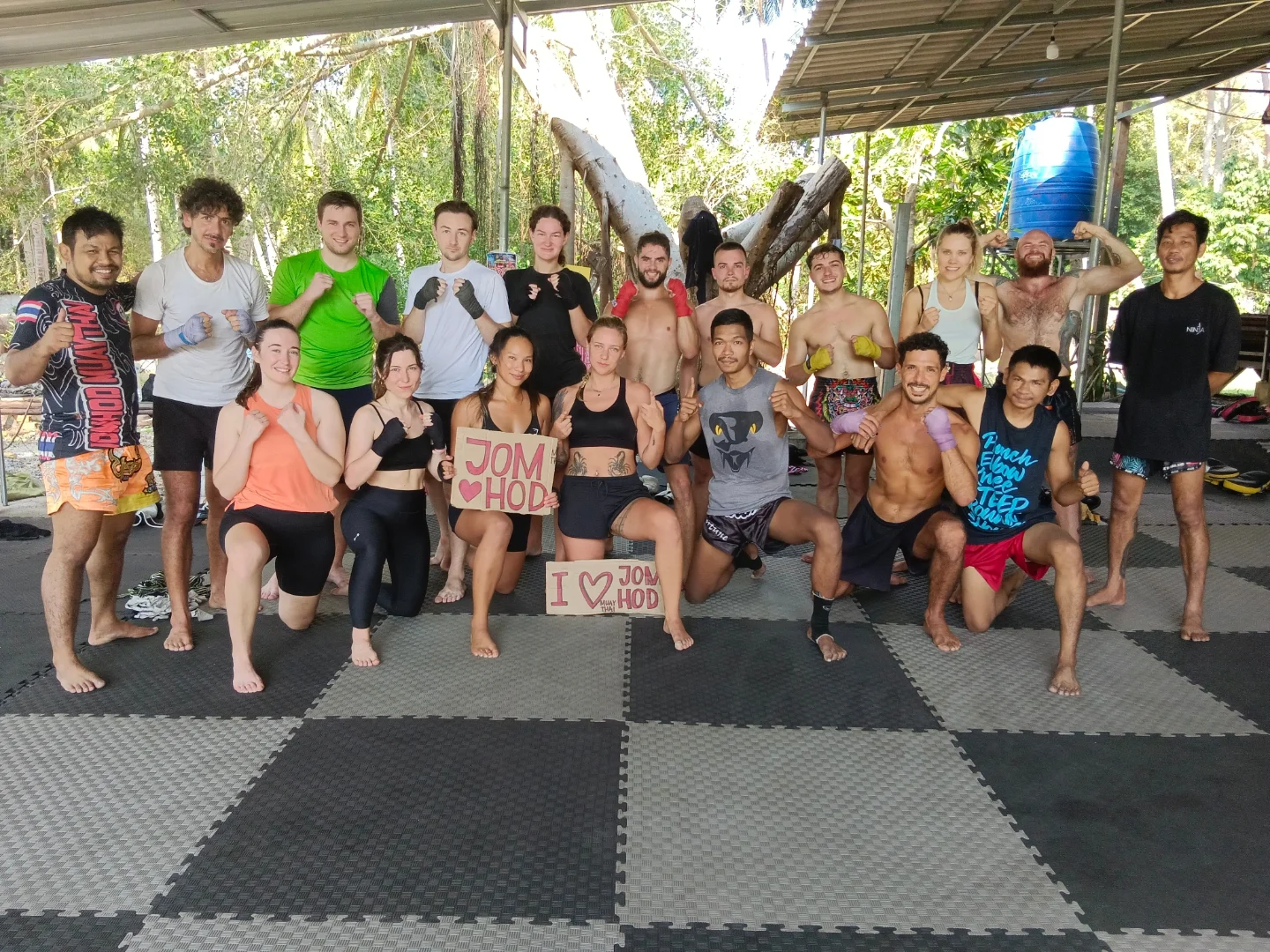
A one-month koh phangan muay thai camp is usually more affordable than people assume in some areas—and more expensive in others. Training fees are relatively predictable. Your biggest swings tend to come from accommodation choices, transport habits, and the small daily expenses you don’t notice until week two.
This guide doesn’t give exact prices, because they change and vary by season, location, and personal preferences. Instead, it gives you a practical way to estimate your monthly spend and avoid the common budgeting surprises.
Training fees (weekly vs monthly overview)
Training fees are usually the easiest part of your month to budget. Whether you train once per day or twice per day, the cost is typically a straightforward package choice. That’s why many people start here when planning muay thai training koh phangan cost.
What you’re really buying with a training package is structure. If you can reliably show up, a monthly plan can remove decision fatigue. If you’re unsure how your body will handle the volume (or you’re arriving after a long flight), a shorter plan can help you ramp up without feeling locked in.
Weekly vs monthly: how people decide
Weekly options make sense if you want flexibility (especially in week one while your body adapts). Monthly options make sense when you’re confident you’ll train consistently and you want the simplest “set it and forget it” plan.
Group training vs private sessions
Your budget can change depending on whether you mainly do group sessions, add private sessions, or mix both. Group training tends to be the backbone of most one-month stays because it’s consistent and repeatable. Private sessions are common when you want extra attention on technique details, conditioning targets, or specific weaknesses.
If you want the most accurate numbers for your gym, check the training pricing page for current packages. Use those as your anchor cost, then build the rest of your budget around them.

Accommodation cost ranges (without exact prices)
Accommodation is where budgets separate quickly. Two people can train at the samemuay thai gym koh phangan, eat similar food, and still spend very different amounts simply because of where (and how) they stay.
In muay thai koh phangan, “cheap vs expensive” isn’t only about comfort. It’s about how the place supports training. A room that helps you sleep, eat, and get to the gym consistently can be better value than a nicer room that makes your routine hard.
What changes the cost the most
The biggest factors are location, room quality, and how long you commit up front. A short-term booking tends to cost more per night. Monthly deals can be better value, but they usually make sense after you understand your routine and what “close enough” feels like for commuting to training.
What to check before you commit
These aren’t glamorous, but they matter for a one-month training block:
- Sleep quality: noise levels and whether the room stays cool enough.
- Commute reality: how it feels in the morning, not just on Google Maps.
- Basics: laundry, water, and reliable internet if you work between sessions.
Also plan for a few “hidden” accommodation-related costs: deposits or prepayment, air conditioning usage, and laundry frequency. None of these are huge alone, but they add up over a month.
Food, transport, and daily expenses
Daily spending is where people lose track of their budget. It’s not one big purchase. It’s the repeated “small” choices: convenience meals, extra coffees, frequent rides, and buying replacements because you didn’t pack a few basics.
Food: consistency beats variety
If you train regularly, you’ll end up eating more consistently. That’s a good thing for performance and recovery, but it means your food budget is a real line item. People who keep it simple (repeatable meals that digest well) usually spend less and feel better.
A practical approach for a month: pick a few “safe” meals that you know work before training, and keep experimenting away from sessions. Gut issues are one of the fastest ways to lose training days.
Transport: scooter habits matter
If you ride a scooter, your budget is influenced by how far you live from the gym and how many extra trips you do each day. If you don’t ride, you’ll probably spend more on taxis or short rides, and you’ll also need to think about how that impacts training consistency.
The “training extras” people forget
Over a month, you may spend on small training-related items: wraps, mouthguard, sunscreen, electrolytes, mosquito repellent, and the occasional replacement because something gets soaked or lost. It’s normal—just plan a buffer so it doesn’t feel like a surprise.
A realistic one-month budget also includes boring essentials like laundry, a local data plan, and daily hydration.

What most people underestimate when budgeting
The biggest underestimation is usually lifestyle drift. In week one, you’re disciplined. By week three, convenience starts winning: more rides, more “quick” meals, and less planning. Your budget doesn’t blow up because you did something wrong; it creeps up.
Recovery spending
Over a month, many trainees spend on recovery because it helps them keep training consistently: basic mobility tools, occasional massage, and small comfort upgrades that protect sleep. None of this is required, but it’s common.
Health and admin buffers
Plan a small buffer for the “adult” stuff that can pop up on longer stays: minor clinic visits, medications for a cold or stomach issues, and basic safety items. If you need anything visa-related, the cost depends on your situation—so treat it as a separate bucket rather than mixing it into food or transport.
Time and friction costs
When your base is far, you often “pay” in time. The result is you buy convenience: more rides, more delivery, more short-term fixes. This is why budgeting and location are connected.

Why accommodation is the biggest variable
For a one-month stay, accommodation doesn’t just affect your rent. It affects transport, food habits, sleep quality, and how easy it is to train consistently. That’s why it usually becomes the biggest budgeting variable.
This is also where planning style matters. If you lock in a monthly place far from training and then discover you hate the commute, you’ll pay twice: once in money, and again in missed sessions. If you stay close early and then switch once you understand your rhythm, you usually end up with a better month.
If you want a practical starting point, use this accommodation guide for staying close to the gym while training to reduce commute friction first. When training is the priority, “close and simple” tends to win over “nice but far.”
A simple monthly budgeting method
If you want a realistic estimate, build your month from three buckets:
- Fixed: training package and accommodation.
- Predictable: food and transport if your routine is stable.
- Buffer: replacement items, small recovery spending, and convenience costs when you’re tired.
This approach won’t give you a single number, but it will keep your plan realistic and stop budget surprises from derailing your training.
A quick “month plan” checklist
- Anchor your training plan (weekly or monthly) based on what you’ll actually do.
- Choose accommodation that protects sleep and reduces commute friction.
- Set a simple food routine for training days (repeatable beats perfect).
- Add a buffer for replacement items and convenience spending on tired days.
If you do those four things, your month becomes predictable—and that’s what makes a one month block of training sustainable.
FAQ
Is Koh Phangan cheaper than other Muay Thai destinations?
It depends on your accommodation and lifestyle. Training fees tend to be fairly comparable across Thailand, while accommodation and “convenience spending” can vary a lot by island and by season.
Can you train Muay Thai on a budget?
Yes—if you keep your routine simple. Staying closer to training, eating consistent meals, and avoiding daily convenience spending are usually more important than finding the cheapest possible room.
Do people usually book accommodation monthly?
Some do, but many people book a shorter first stay and then extend or switch once they understand their routine and preferred area. It’s a practical way to avoid committing before you know what works.
What costs increase over longer stays?
Over time, convenience spending and replacement items become more noticeable. Your budget is also influenced by recovery habits and transport choices, especially if your accommodation is far from training.
Conclusion
A one-month Muay Thai stay is easiest to budget when you treat training fees as your anchor cost, then keep accommodation and daily routines simple. Don’t chase a perfect number—build a plan with a buffer, reduce friction, and you’ll spend less mental energy on money and more on training.